The impossible choice
Close on the survivor's tearful face and shaking hands. The person who turned remains across the room.
 ZOMBIE COUPLE.CUSTOM
A few words can set the whole scene.
Copy a starting prompt and give it your own twist.
The analyzed 15-second direction separates observed visual grammar from the creative compression used for Seedance 2.0.
15s · 9:16 · Seedance 2.0 reference-to-video
The repeated visual grammar is a cold interior, a crying survivor aiming then lowering a pistol, a zombie approach or lunge, and a direct cut to warm outdoor memories. The examples run from 12.20 to 44.20 seconds, and some continue into a phone tutorial. This product compresses the core story into 15 seconds.
Close on the survivor's tearful face and shaking hands. The person who turned remains across the room.
Reveal the non-gory zombie makeup, then let a human expression return for a moment.
The weapon lowers. Arms open. The other person runs forward. Cut at the emotional peak.
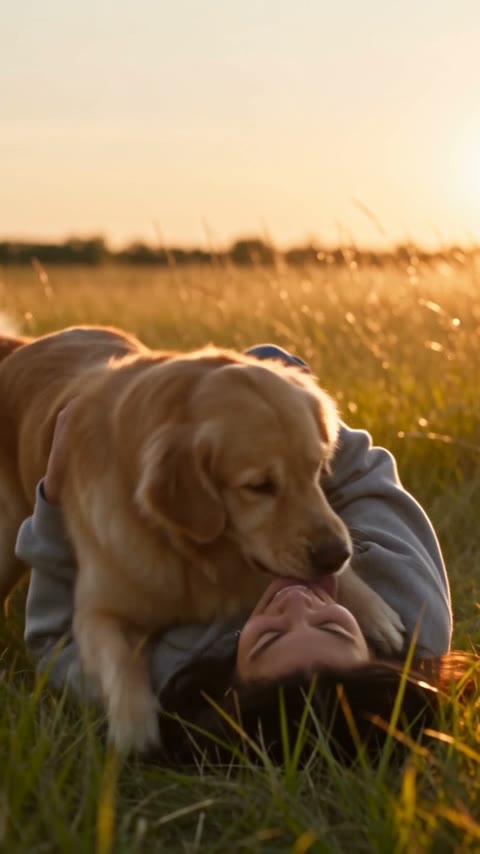
Both people are healthy in golden-hour light, laughing and holding each other in a field.
Create a 15-second cinematic zombie love story in vertical 9:16.

PERSON A is reference image 1: the person who has turned. PERSON B is reference image 2: the person who cannot let them go. Preserve both identities, skin tones, hairstyles, facial features, and natural body proportions throughout.

0-3s: inside a worn, abandoned house in cold blue-grey daylight, close-up of Person B crying and aiming a black pistol with shaking hands. No firing.

3-6s: reverse shot reveals Person A across the room with ashen grey skin, faint dark veins, cloudy pale eyes, and dusty torn clothes, but the face remains clearly recognizable. No blood, wounds, exposed flesh, or gore.

6-9s: Person B lowers the pistol and opens both arms. Person A recognizes them, runs forward, and leaps into the embrace.

At the emotional peak, use a clean hard cut in mid-embrace—no fade, dissolve, or morph.

9-15s: the same two people are healthy again in a warm golden wheat field at sunset. They land in the embrace, laugh, spin once, fall gently into the wheat, and hold each other. Finish on a wide silhouette against the sun.

Cold desaturated teal in the house; warm gold and peach in the memory. Realistic natural motion, restrained film grain, emotional close-ups.

Sound design: begin with a quiet abandoned-room tone, faint wind through broken windows, subtle wood creaks, Person B's controlled breathing, and soft clothing movement. Synchronize Person A's approaching footsteps and the impact of the embrace. No gunshot. At the hard cut, cleanly replace the cold room tone with warm meadow wind, moving wheat, distant birds, and brief natural laughter. Add a sparse original low-string and piano texture that rises gently into the embrace without resembling any existing song. Keep effects synchronized and dialogue-free: no spoken words, voice-over, screaming, zombie groans, recognizable melody, copyrighted recording, abrupt clipping, or overpowering music.

No text, subtitles, watermark, logos, or extra people.
The 15-second timing, makeup language, and shot compression are the direction used for Seedance 2.0.
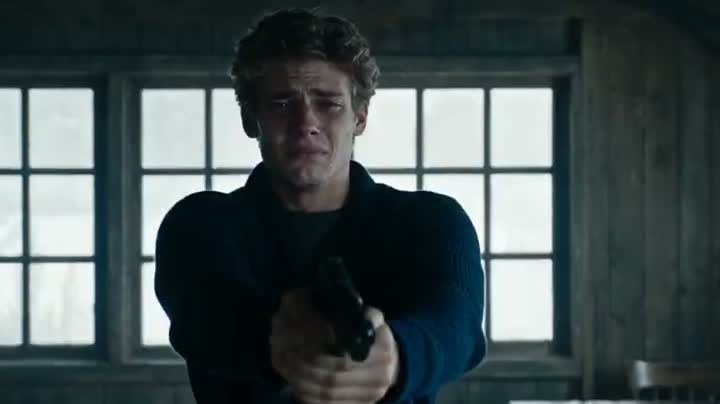
Create a 15-second cinematic zombie love story in vertical 9:16. PERSON A is reference image 1: the person who has turned. PERSON B is reference image 2: the person who cannot let them go. Preserve both identities, skin tones, hairstyles, facial features, and natural body proportions throughout. 0-3s: inside a worn, abandoned house in cold blue-grey daylight, close-up of Person B crying and aiming a black pistol with shaking hands. No firing. 3-6s: reverse shot reveals Person A across the room with ashen grey skin, faint dark veins, cloudy pale eyes, dusty torn clothes, but the face remains clearly recognizable. No blood, wounds, exposed flesh, or gore. 6-9s: Person B lowers the pistol and opens both arms. Person A recognizes them, runs forward, and leaps into the embrace. At exactly the emotional peak, use a clean hard cut in mid-embrace—no fade, dissolve, or morph. 9-15s: the same two people are healthy again in a warm golden wheat field at sunset. They land in the embrace, laugh, spin once, fall gently into the wheat, and hold each other. Finish on a wide silhouette against the sun. Cold desaturated teal in the house; warm gold and peach in the memory. Realistic natural motion, restrained film grain, emotional close-ups. Sound design: begin with a quiet abandoned-room tone, faint wind through broken windows, subtle wood creaks, Person B's controlled breathing, and soft clothing movement. Synchronize Person A's approaching footsteps and the impact of the embrace. No gunshot. At the hard cut, cleanly replace the cold room tone with warm meadow wind, moving wheat, distant birds, and brief natural laughter. Add a sparse original low-string and piano texture that rises gently into the embrace without resembling any existing song. Keep effects synchronized and dialogue-free: no spoken words, voice-over, screaming, zombie groans, recognizable melody, copyrighted recording, abrupt clipping, or overpowering music. No text, subtitles, watermark, logos, or extra people. {userPrompt}
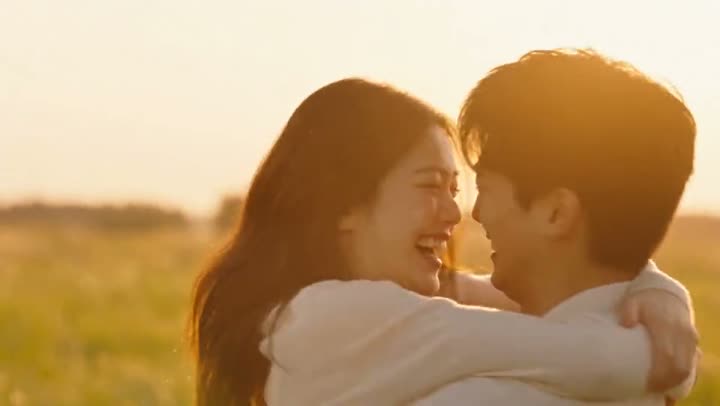
Create a 15-second cinematic zombie love story in vertical 9:16. PERSON A is reference image 1: the person who has turned. PERSON B is reference image 2: the person who cannot let them go. Preserve both identities, skin tones, hairstyles, facial features, and natural body proportions throughout. 0-3s: inside a worn, abandoned house in cold blue-grey daylight, close-up of Person B crying and aiming a black pistol with shaking hands. No firing. 3-6s: reverse shot reveals Person A across the room with ashen grey skin, faint dark veins, cloudy pale eyes, dusty torn clothes, but the face remains clearly recognizable. No blood, wounds, exposed flesh, or gore. 6-9s: Person B lowers the pistol and opens both arms. Person A recognizes them, runs forward, and leaps into the embrace. At exactly the emotional peak, use a clean hard cut in mid-embrace—no fade, dissolve, or morph. 9-15s: the same two people are healthy again in a warm golden wheat field at sunset. They land in the embrace, laugh, spin once, fall gently into the wheat, and hold each other. Finish on a wide silhouette against the sun. Cold desaturated teal in the house; warm gold and peach in the memory. Realistic natural motion, restrained film grain, emotional close-ups. Sound design: begin with a quiet abandoned-room tone, faint wind through broken windows, subtle wood creaks, Person B's controlled breathing, and soft clothing movement. Synchronize Person A's approaching footsteps and the impact of the embrace. No gunshot. At the hard cut, cleanly replace the cold room tone with warm meadow wind, moving wheat, distant birds, and brief natural laughter. Add a sparse original low-string and piano texture that rises gently into the embrace without resembling any existing song. Keep effects synchronized and dialogue-free: no spoken words, voice-over, screaming, zombie groans, recognizable melody, copyrighted recording, abrupt clipping, or overpowering music. No text, subtitles, watermark, logos, or extra people. {userPrompt} Make the performances youthful, tender, and understated. Favor close facial coverage before the hard cut. Sound variation: make the breathing and footsteps lighter, add a soft heartbeat-like pulse before the embrace, and let the meadow section resolve with delicate original piano notes and gentle laughter.
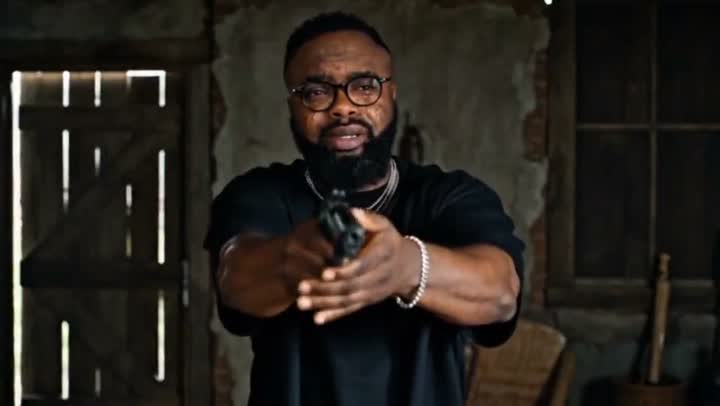
Create a 15-second cinematic zombie love story in vertical 9:16. PERSON A is reference image 1: the person who has turned. PERSON B is reference image 2: the person who cannot let them go. Preserve both identities, skin tones, hairstyles, facial features, and natural body proportions throughout. 0-3s: inside a worn, abandoned house in cold blue-grey daylight, close-up of Person B crying and aiming a black pistol with shaking hands. No firing. 3-6s: reverse shot reveals Person A across the room with ashen grey skin, faint dark veins, cloudy pale eyes, dusty torn clothes, but the face remains clearly recognizable. No blood, wounds, exposed flesh, or gore. 6-9s: Person B lowers the pistol and opens both arms. Person A recognizes them, runs forward, and leaps into the embrace. At exactly the emotional peak, use a clean hard cut in mid-embrace—no fade, dissolve, or morph. 9-15s: the same two people are healthy again in a warm golden wheat field at sunset. They land in the embrace, laugh, spin once, fall gently into the wheat, and hold each other. Finish on a wide silhouette against the sun. Cold desaturated teal in the house; warm gold and peach in the memory. Realistic natural motion, restrained film grain, emotional close-ups. Sound design: begin with a quiet abandoned-room tone, faint wind through broken windows, subtle wood creaks, Person B's controlled breathing, and soft clothing movement. Synchronize Person A's approaching footsteps and the impact of the embrace. No gunshot. At the hard cut, cleanly replace the cold room tone with warm meadow wind, moving wheat, distant birds, and brief natural laughter. Add a sparse original low-string and piano texture that rises gently into the embrace without resembling any existing song. Keep effects synchronized and dialogue-free: no spoken words, voice-over, screaming, zombie groans, recognizable melody, copyrighted recording, abrupt clipping, or overpowering music. No text, subtitles, watermark, logos, or extra people. {userPrompt} Give the memory half an intimate anniversary-film feeling, with gentle smiles and natural affection. Sound variation: use an intimate room tone with a faint old clock, restrained footsteps, and a warm original acoustic texture after the cut, mixed below the meadow wind and the couple's natural laughter.
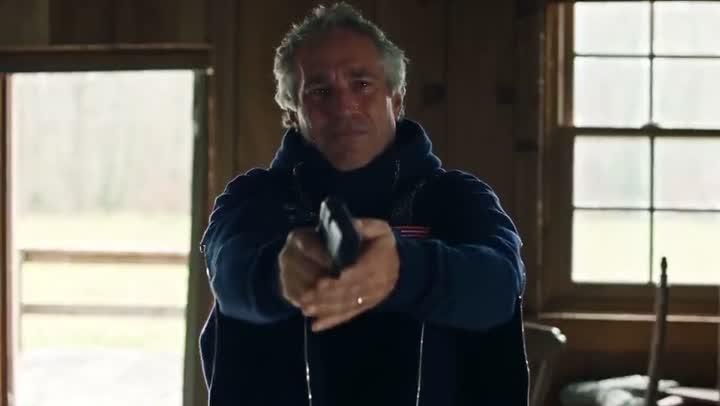
Create a 15-second cinematic zombie love story in vertical 9:16. PERSON A is reference image 1: the person who has turned. PERSON B is reference image 2: the person who cannot let them go. Preserve both identities, skin tones, hairstyles, facial features, and natural body proportions throughout. 0-3s: inside a worn, abandoned house in cold blue-grey daylight, close-up of Person B crying and aiming a black pistol with shaking hands. No firing. 3-6s: reverse shot reveals Person A across the room with ashen grey skin, faint dark veins, cloudy pale eyes, dusty torn clothes, but the face remains clearly recognizable. No blood, wounds, exposed flesh, or gore. 6-9s: Person B lowers the pistol and opens both arms. Person A recognizes them, runs forward, and leaps into the embrace. At exactly the emotional peak, use a clean hard cut in mid-embrace—no fade, dissolve, or morph. 9-15s: the same two people are healthy again in a warm golden wheat field at sunset. They land in the embrace, laugh, spin once, fall gently into the wheat, and hold each other. Finish on a wide silhouette against the sun. Cold desaturated teal in the house; warm gold and peach in the memory. Realistic natural motion, restrained film grain, emotional close-ups. Sound design: begin with a quiet abandoned-room tone, faint wind through broken windows, subtle wood creaks, Person B's controlled breathing, and soft clothing movement. Synchronize Person A's approaching footsteps and the impact of the embrace. No gunshot. At the hard cut, cleanly replace the cold room tone with warm meadow wind, moving wheat, distant birds, and brief natural laughter. Add a sparse original low-string and piano texture that rises gently into the embrace without resembling any existing song. Keep effects synchronized and dialogue-free: no spoken words, voice-over, screaming, zombie groans, recognizable melody, copyrighted recording, abrupt clipping, or overpowering music. No text, subtitles, watermark, logos, or extra people. {userPrompt} Use restrained mature performances, a longer hesitation before the arms open, and a quiet, dignified memory scene. Sound variation: hold near-silence during the hesitation, with only breathing, distant wind, and one floorboard creak; introduce a single low original cello tone at the embrace, then resolve into soft meadow wind with no laughter.
Create a 15-second cinematic pet reunion in vertical 9:16. The pet is reference image 1. The owner is reference image 2. Keep the pet's species, fur, markings, and collar, and the owner's face and clothes. 0-4s: dusk inside an abandoned supermarket with empty shelves and cold fluorescent light. Close on the owner crying and aiming a handgun with shaking hands. No shot is fired. 4-7s: down the aisle, the pet stands as a non-gory zombie: patchy dull fur, cloudy white eyes, a snarl, and the same collar. A small tag or bell catches the light. 7-10s: the owner lowers the weapon, kneels, and opens both arms. The pet runs and leaps. At the leap, hard-cut with no fade or morph. 10-15s: the same pet is healthy in a golden meadow, lands in the owner's arms, and they rest together in warm grass. Sound design: start with a low fluorescent hum, distant refrigerator rattle, the owner's controlled breathing, and small paw steps on tile. Feature one clear collar-bell chime as the recognition cue, then synchronize the faster paw run and soft clothing impact at the leap. No gunshot. At the hard cut, replace the supermarket hum with warm meadow wind, grass rustle, birds, relaxed panting, and a quiet original emotional music texture. Keep identities, markings, hair, and clothes consistent. Clean costume makeup only: no blood, wounds, exposed flesh, or gore. Keep audio synchronized, clean, and naturally stereo. No spoken dialogue, voice-over, screaming, recognizable melody, copyrighted recording, abrupt clipping, or overpowering music. No text, subtitles, watermark, or logos. {userPrompt}

Create a 15-second cinematic story of two pets in vertical 9:16. Pet A is reference image 1, the one who turns. Pet B is reference image 2, the one who stays. Keep both species, fur colors, and markings. They remain animals, not people. 0-4s: a dusty abandoned living room in cold daylight. Pet B faces Pet A and hesitates, as if it cannot come closer. 4-8s: Pet A steps out of the dark hallway with dull fur and cloudy eyes, still recognizable. A collar bell is the recognition detail. No wounds. 8-10s: Pet B comes forward and waits. Pet A rushes in. Hard-cut on contact. 10-15s: both pets are healthy in a golden meadow, tumbling, then sitting together against the sunset. Sound design: use a dusty-room tone, faint window wind, floorboard creaks, separate paw steps for each pet, and one delicate collar-bell cue. Build the paw rhythm as Pet A rushes in. At contact, hard-cut the room tone into meadow wind, grass movement, birds, playful paws, and soft animal breathing. Use only a subtle original warm music bed beneath the natural sounds. Keep identities, markings, hair, and clothes consistent. Clean costume makeup only: no blood, wounds, exposed flesh, or gore. Keep audio synchronized, clean, and naturally stereo. No spoken dialogue, voice-over, screaming, recognizable melody, copyrighted recording, abrupt clipping, or overpowering music. No text, subtitles, watermark, or logos. {userPrompt}
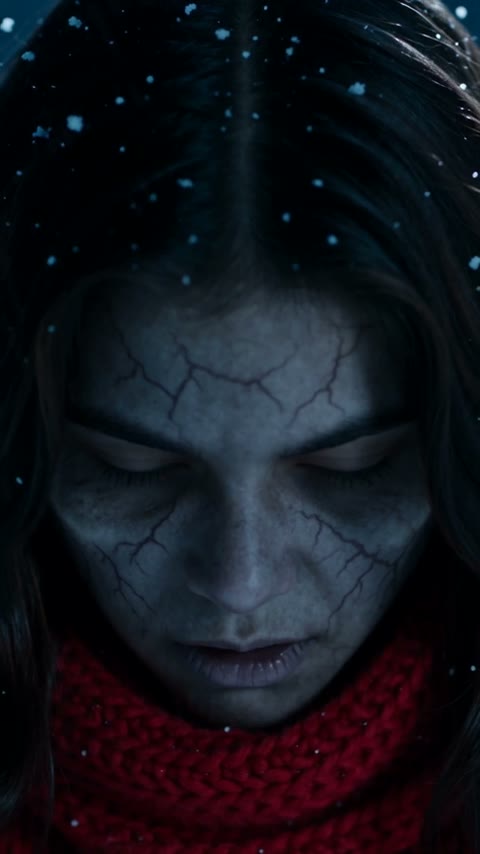
Create a 15-second cinematic zombie love story in vertical 9:16. Person A is reference image 1, the one who turned. Person B is reference image 2, the one who holds on. Keep both faces, hair, and clothes. 0-4s: night on a moonlit snowfield with pine trees. Close on Person B crying, snow on their face, aiming a shotgun with shaking hands. No shot is fired. 4-8s: Person A stands across the snow with ashen skin, cloudy eyes, and their own clothes. The face stays recognizable. No blood or wounds. 8-11s: Person B lowers the weapon and opens both arms. Person A runs across the snow. Hard-cut in the run, with no fade. 11-15s: both people are healthy in a golden grass field. They run together, embrace, and fall gently into the grass against the sun. Sound design: begin with cold stereo wind across the pines, granular snow under each step, Person B's restrained breathing, and cloth moving in the gusts. No gunshot. Let the running footsteps accelerate, then make the hard cut audible: snow and wind stop cleanly and are replaced by warm meadow wind, grass, distant birds, the embrace impact, and one brief natural laugh. Add a sparse original low-string swell below the effects. Keep identities, markings, hair, and clothes consistent. Clean costume makeup only: no blood, wounds, exposed flesh, or gore. Keep audio synchronized, clean, and naturally stereo. No spoken dialogue, voice-over, screaming, recognizable melody, copyrighted recording, abrupt clipping, or overpowering music. No text, subtitles, watermark, or logos. {userPrompt}
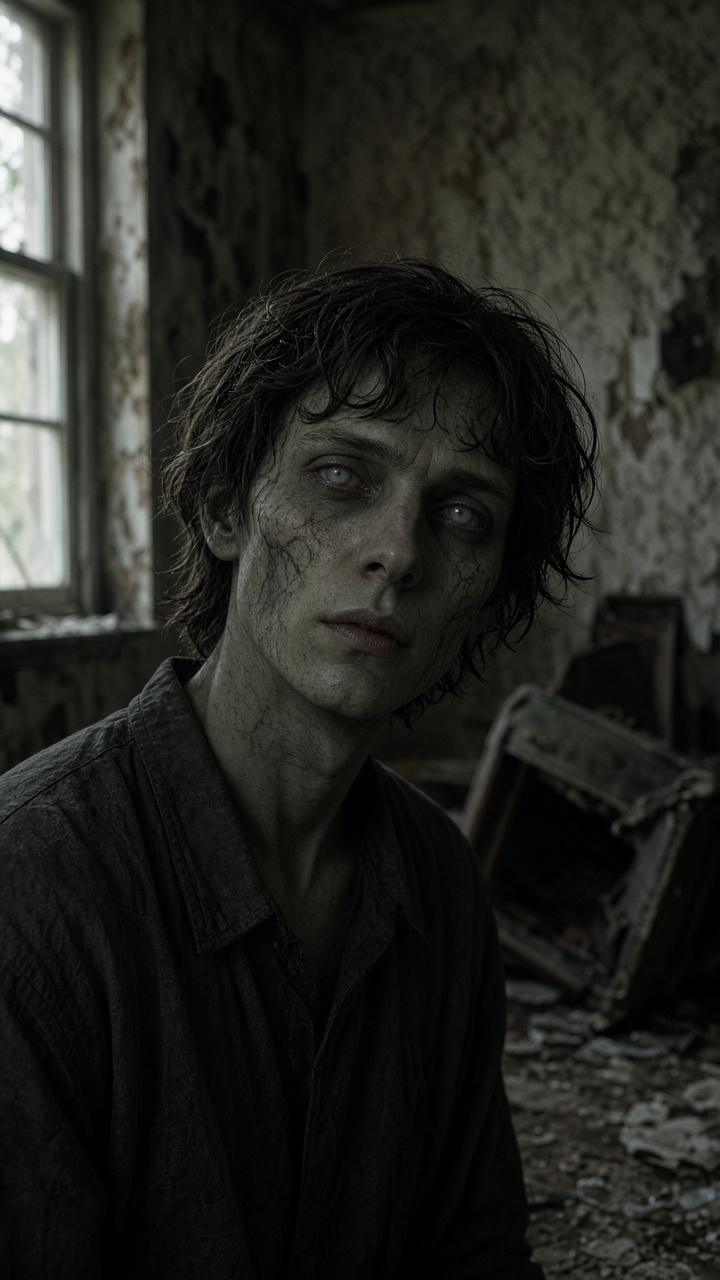
Create a 15-second close transformation in vertical 9:16. The person is reference image 1. Keep the same face shape, hair, and clothes. 0-3s: inside a dim, dusty room, the person looks like the photo. The camera pushes in slowly. 3-8s: skin fades to grey-green, faint dark veins show at the temples and neck, the eyes cloud, and the hair looks dusty. No blood or wounds. 8-12s: they twitch once, tilt the head, and give a slow stiff look into the lens. The practical light flickers cold. 12-15s: hold a tight close-up so the changed face is still recognizable. Sound design: use a close dusty-room tone, quiet breathing, a distant pipe knock, and subtle electrical buzz. During the change, add restrained skin-tightening texture and a low sub-bass pulse without wet, graphic, or bone-breaking sounds. Synchronize one dry cloth twitch and the lamp flicker. End on near-silence with a faint breath; no growling. Keep identities, markings, hair, and clothes consistent. Clean costume makeup only: no blood, wounds, exposed flesh, or gore. Keep audio synchronized, clean, and naturally stereo. No spoken dialogue, voice-over, screaming, recognizable melody, copyrighted recording, abrupt clipping, or overpowering music. No text, subtitles, watermark, or logos. {userPrompt}
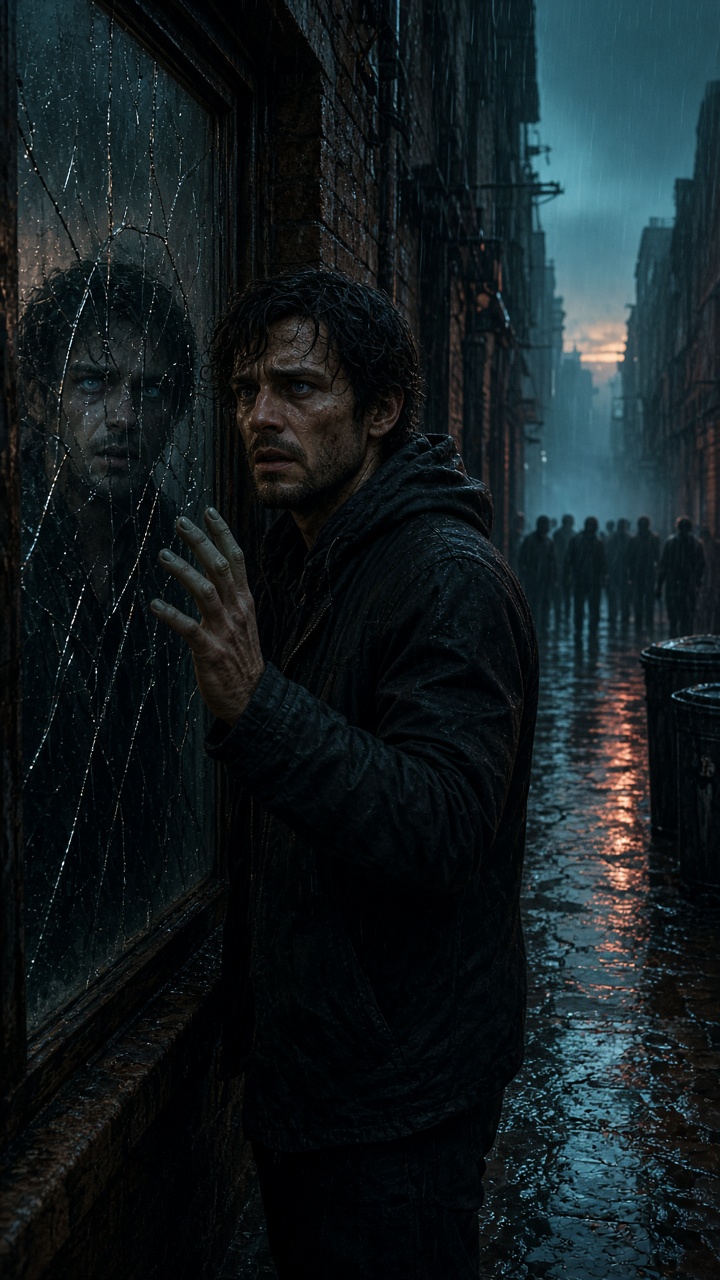
Create a 15-second outbreak trailer in vertical 9:16. The survivor is reference image 1. Keep their face, hair, and clothes. They are the only hero. 0-3s: dawn on an empty wet city alley with brick walls, bins, and neon reflected in puddles. The survivor walks in and looks around. 3-6s: a wide view shows a slow, distant crowd of anonymous zombies in the haze. No gore and no readable faces. 6-10s: the survivor sees them, turns, and runs. The camera follows from behind. The crowd stays far back. 10-12s: they stop in a doorway and notice their own hand turning grey-green. 12-15s: they look into a cracked dark window. The reflection has the same face with cloudy eyes. Sound design: layer steady rain, gutter drips, distant traffic decay, shoes splashing through puddles, and increasingly urgent breathing. Keep the far crowd as a low indistinct murmur with no intelligible words or close screams. Synchronize the run, doorway stop, sleeve movement, and a faint glass resonance at the reflection. Use a restrained original pulse that drops to near-silence for the final look. Keep identities, markings, hair, and clothes consistent. Clean costume makeup only: no blood, wounds, exposed flesh, or gore. Keep audio synchronized, clean, and naturally stereo. No spoken dialogue, voice-over, screaming, recognizable melody, copyrighted recording, abrupt clipping, or overpowering music. No text, subtitles, watermark, or logos. {userPrompt}
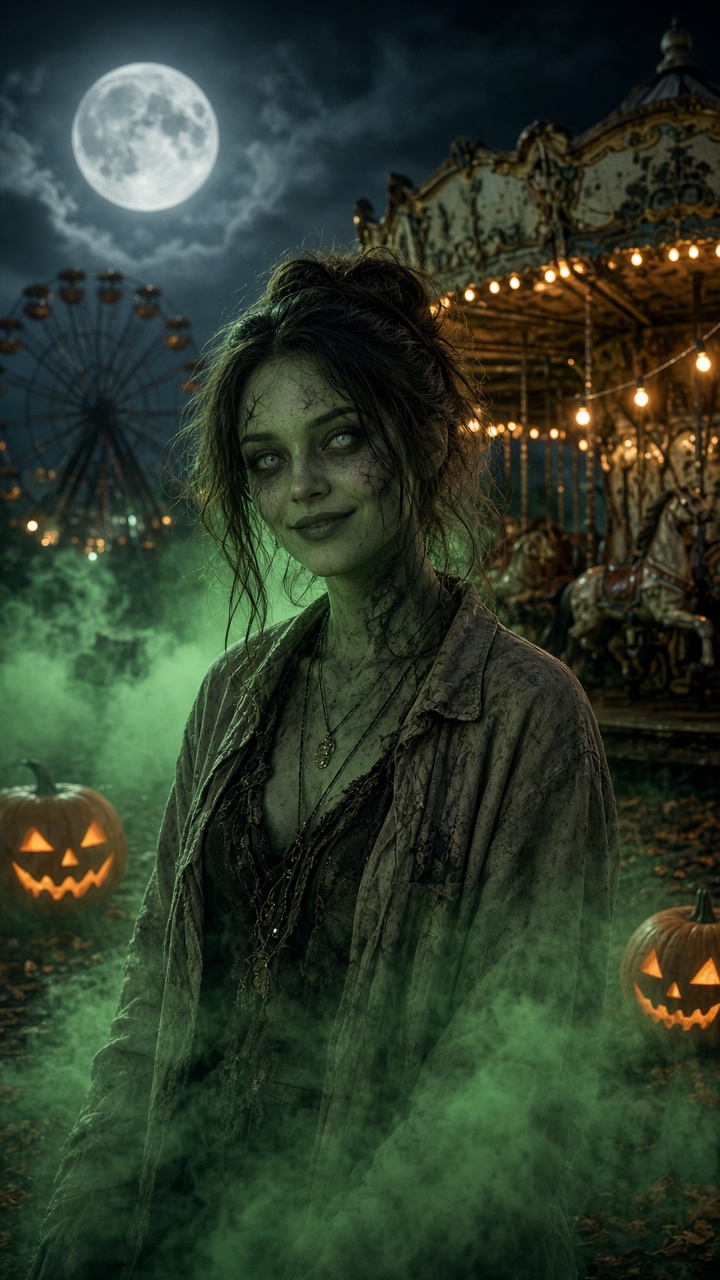
Create a 15-second playful Halloween reveal in vertical 9:16. The person is reference image 1. Keep their face and hair. 0-4s: night at an abandoned fair with a Ferris wheel, a worn carousel, and a few warm string lights. The person smiles at the camera. 4-8s: a thin green mist passes. Their skin shifts to grey-green and their eyes cloud, like movie makeup. No blood or wounds. 8-15s: they strike a playful undead pose among the lights, then the camera eases back to show the fair. Sound design: use cool night wind, distant carousel mechanics, a soft Ferris-wheel creak, and sparse fairground bulbs buzzing. Synchronize a playful airy whoosh with the green mist and a small costume rustle with the pose. Add a quirky original plucked-music motif with no recognizable tune, mixed below the ambience. No growling or frightening screams. Keep identities, markings, hair, and clothes consistent. Clean costume makeup only: no blood, wounds, exposed flesh, or gore. Keep audio synchronized, clean, and naturally stereo. No spoken dialogue, voice-over, screaming, recognizable melody, copyrighted recording, abrupt clipping, or overpowering music. No text, subtitles, watermark, or logos. {userPrompt}
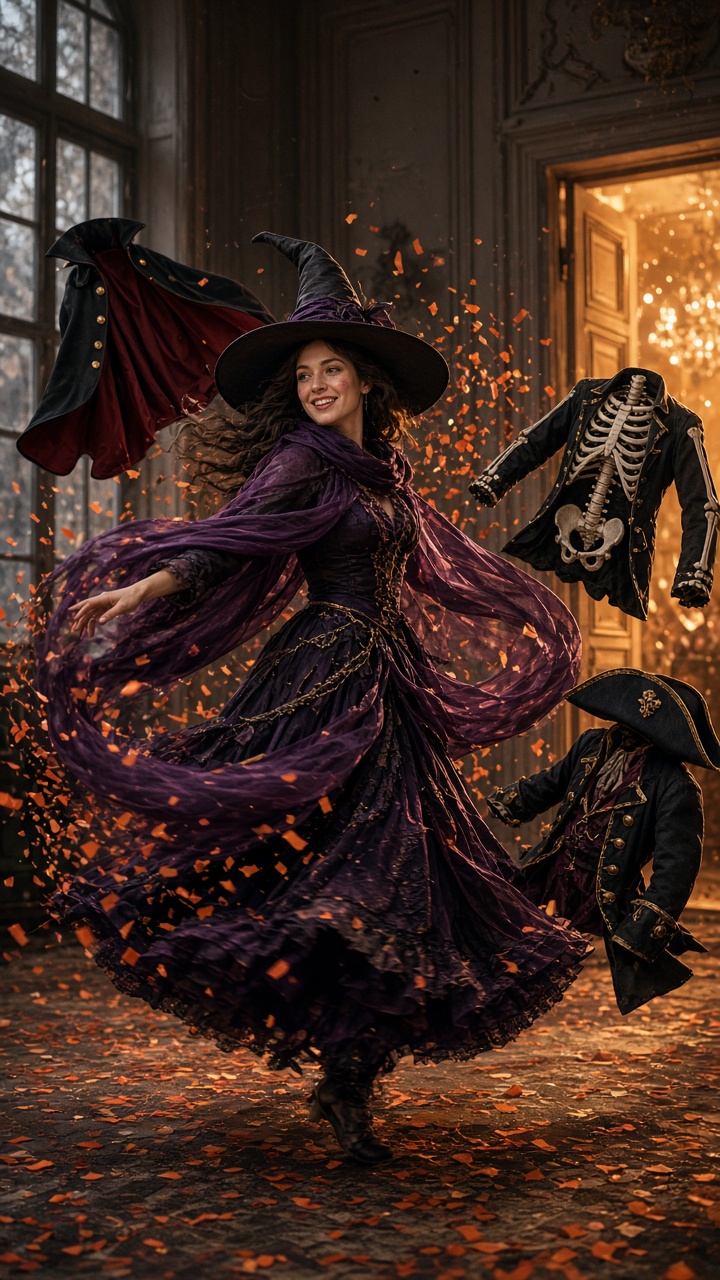
Create a 15-second costume try-on in vertical 9:16. The person is reference image 1. Keep their face and hair in every shot. 0-3s: a dusty old room with tall windows. They stand in everyday clothes holding a costume bag. 3-6s: they spin through orange confetti into a classic witch look: pointed hat and a dark purple scarf. 6-9s: another spin reveals an elegant vampire cape with a red lining. No fangs that break the face. 9-12s: a black outfit with simple white skeleton paint on the clothes, not wounds. 12-15s: a pirate coat and tricorn hat, then they open a door toward warm party light. Sound design: start with quiet room tone, fabric handling, and the costume bag opening. Give each spin one clean synchronized cloth swish and a distinct original accent: airy chime for witch, low cape flutter for vampire, dry percussion tap for skeleton, and a light wooden knock for pirate. Finish with the door latch, warm party ambience, and a short original celebratory flourish. No dialogue or recognizable song. Keep identities, markings, hair, and clothes consistent. Clean costume makeup only: no blood, wounds, exposed flesh, or gore. Keep audio synchronized, clean, and naturally stereo. No spoken dialogue, voice-over, screaming, recognizable melody, copyrighted recording, abrupt clipping, or overpowering music. No text, subtitles, watermark, or logos. {userPrompt}
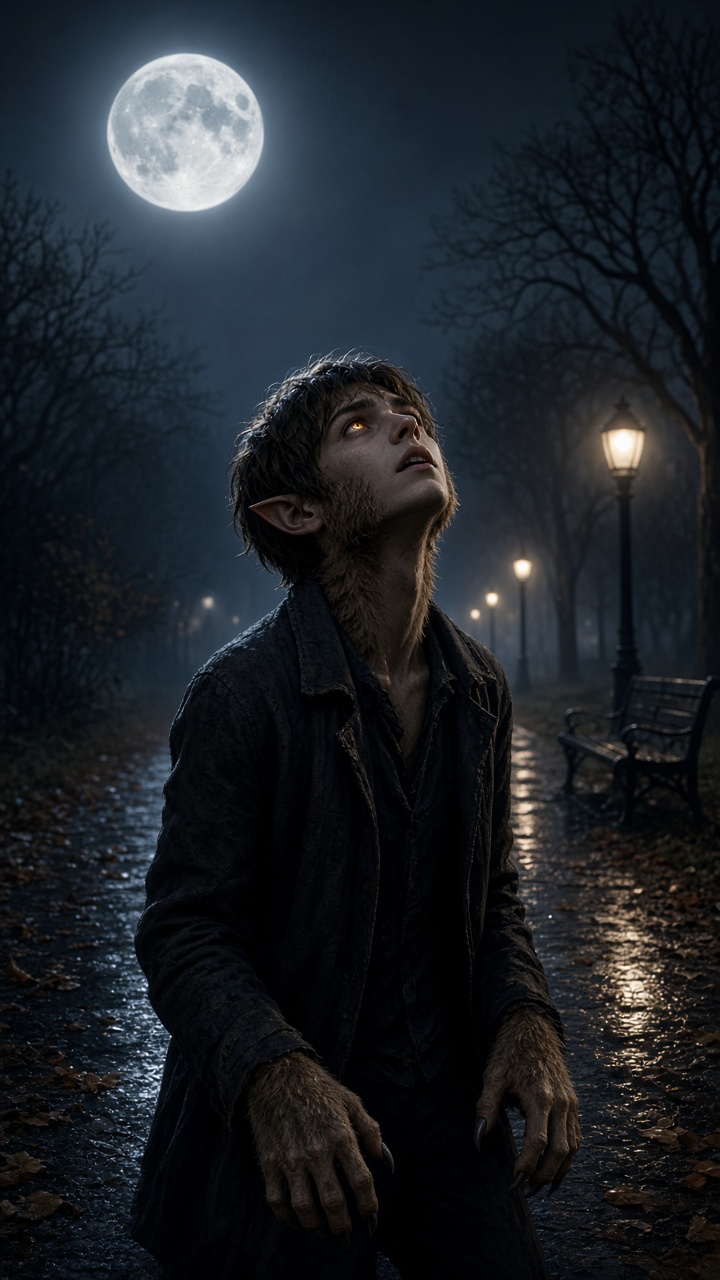
Create a 15-second werewolf transformation in vertical 9:16. The person is reference image 1. Keep their eyes and hair color recognizable. 0-3s: night on a foggy park path with benches, wet leaves, and a row of lamps. They walk and stop as moonlight hits them. 3-6s: close on the eyes as the irises glow amber. 6-10s: short fur spreads over the backs of the hands in their hair color, and the nails darken into short claws. No blood. 10-13s: fur grows along the jaw and the ears rise to points. Their clothes stay. 13-15s: the camera pulls back as they howl toward the bright moon above the trees. Sound design: begin with damp night wind, wet leaves under shoes, distant insects, and faint lamp electrical hum. Add a low heartbeat as the eyes change, then restrained fur-brush and leather-glove textures across the hands; avoid cracking bones or graphic body sounds. Let the park ambience fall away before one clear, natural wolf howl synchronized to the final pose, with a subtle original low drone underneath. Keep identities, markings, hair, and clothes consistent. Clean costume makeup only: no blood, wounds, exposed flesh, or gore. Keep audio synchronized, clean, and naturally stereo. No spoken dialogue, voice-over, screaming, recognizable melody, copyrighted recording, abrupt clipping, or overpowering music. No text, subtitles, watermark, or logos. {userPrompt}
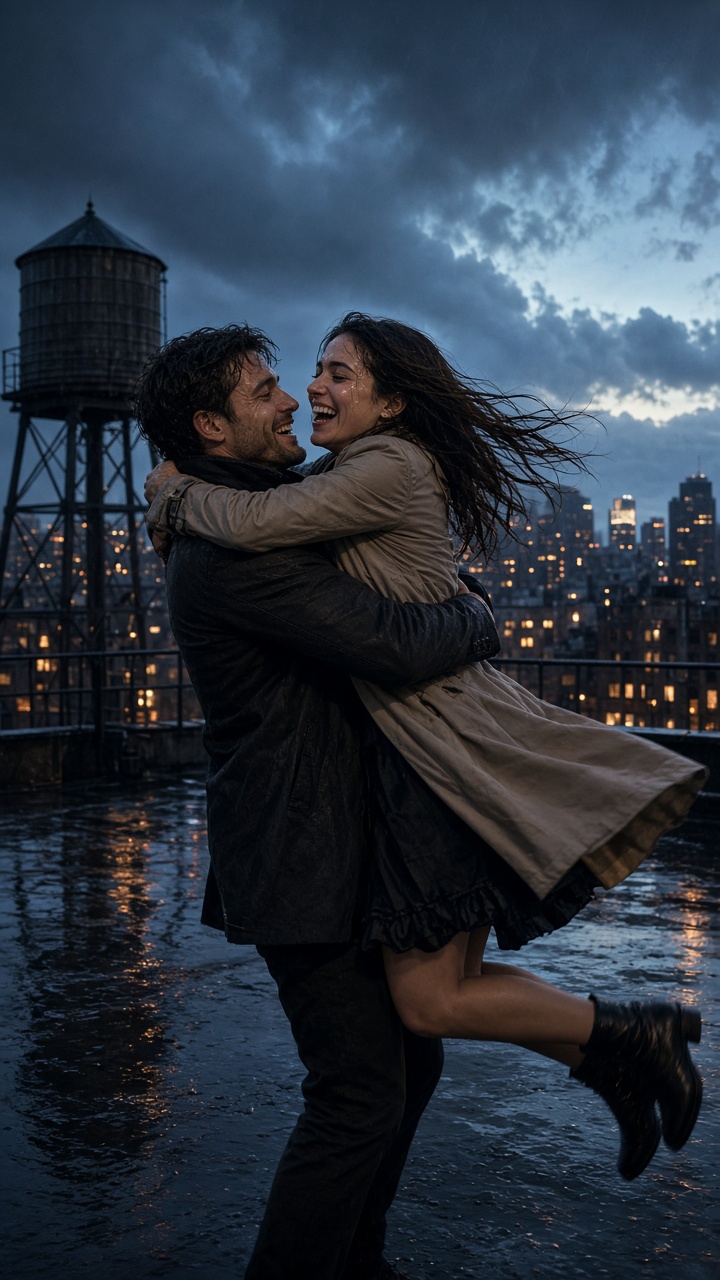
Create a 15-second reunion in vertical 9:16. No zombies and no weapons. Person A is reference image 1. Person B is reference image 2. Keep both faces, hair, and clothes. 0-4s: a wet city rooftop at blue hour, with a water tower and lit towers behind them. They notice each other from opposite sides and smile. 4-8s: both walk, then run toward each other. 8-12s: they meet in a hug. One lifts the other into a short spin. Close on both laughing faces. 12-15s: the camera pulls back until they are a small pair against the sky. Sound design: use rooftop wind, gentle rain drips, distant softened city traffic, and separate approaching footsteps that accelerate into a run. Synchronize the embrace with a soft clothing impact, the spin with fabric movement, and include brief natural laughter without spoken words. Add a warm original piano-and-pad texture that rises at the hug and stays below the rain and voices. Keep identities, markings, hair, and clothes consistent. Clean costume makeup only: no blood, wounds, exposed flesh, or gore. Keep audio synchronized, clean, and naturally stereo. No spoken dialogue, voice-over, screaming, recognizable melody, copyrighted recording, abrupt clipping, or overpowering music. No text, subtitles, watermark, or logos. {userPrompt}
Keep your subject, setting, motion, and light concrete. Change one detail at a time.